Graph Paths Explained: Node vs Edge Based, Simple Paths, Cycles and DAGs

Graph Paths Explained: Node vs Edge Based, Simple Paths, Cycles and DAGs

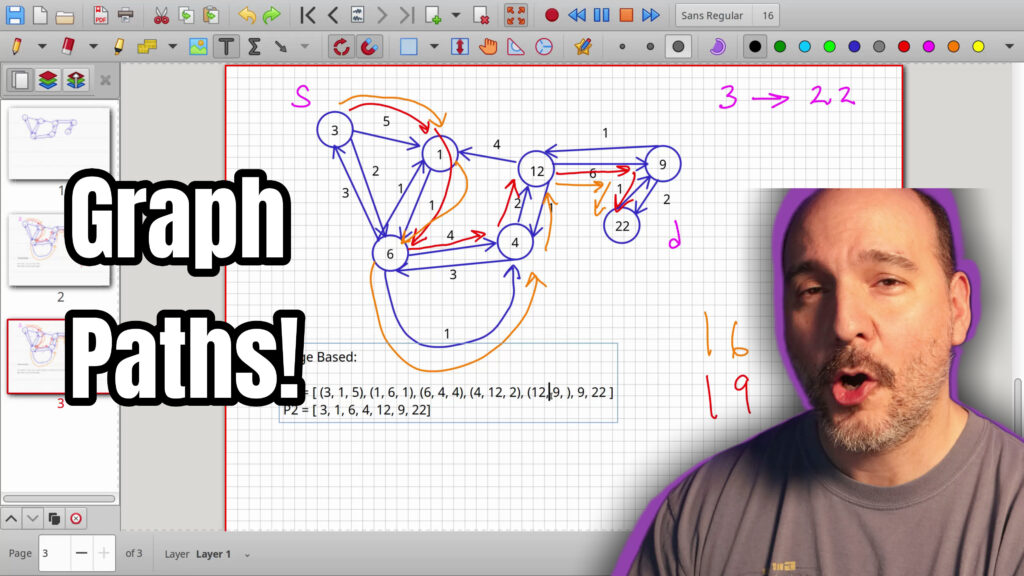
Paths in a graph show how to travel from a start node to a destination. Node-based paths list the nodes visited but cannot distinguish parallel edges with different weights. Edge-based paths use tuples of start node, destination node and weight so every route is exact. Simple paths repeat no edges or vertices. Cyclic paths start and end on the same node and prove the graph is cyclic. A DAG is a directed acyclic graph with no cycles. These ideas prepare for graph algorithms.
Graph Connectedness Explained: Connected Strongly Connected and Weakly Connected

Graph Connectedness Explained: Connected Strongly Connected and Weakly Connected

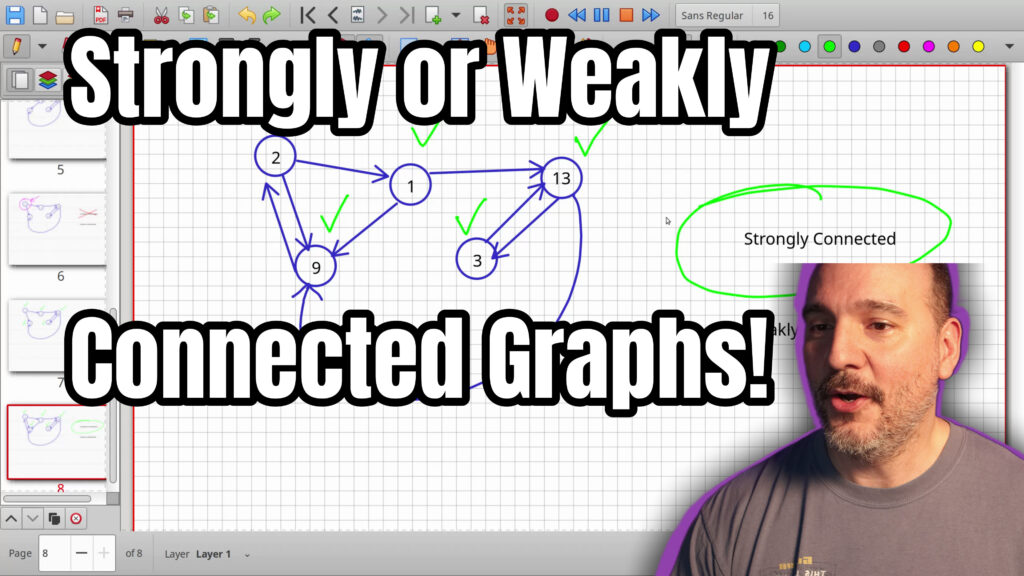
This video explains graph connectedness for both undirected and directed graphs. For undirected graphs a connected graph means every node can reach every other node through a path. Disconnected graphs have nodes that cannot reach others and may contain separate subgraphs. For directed graphs the terms change to strongly connected where every node reaches every other node following edge directions and weakly connected where the graph is connected if directions are ignored. Step by step examples show how adding edges turns a graph from not connected to weakly connected and finally to strongly connected.