AVL Tree Rotations Tutorial: Fixing Imbalance After Adding a Node

AVL Tree Rotations Tutorial: Fixing Imbalance After Adding a Node

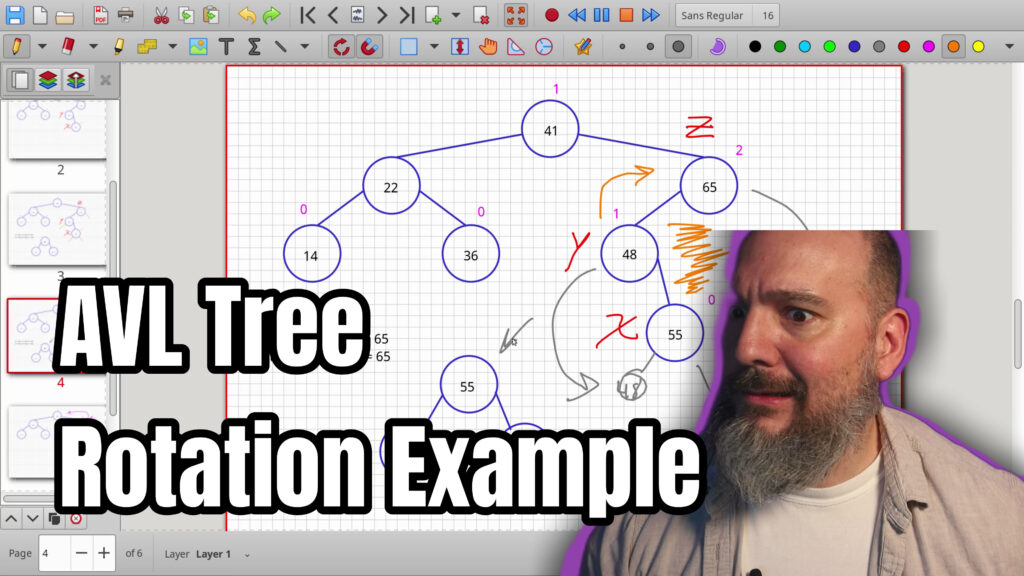
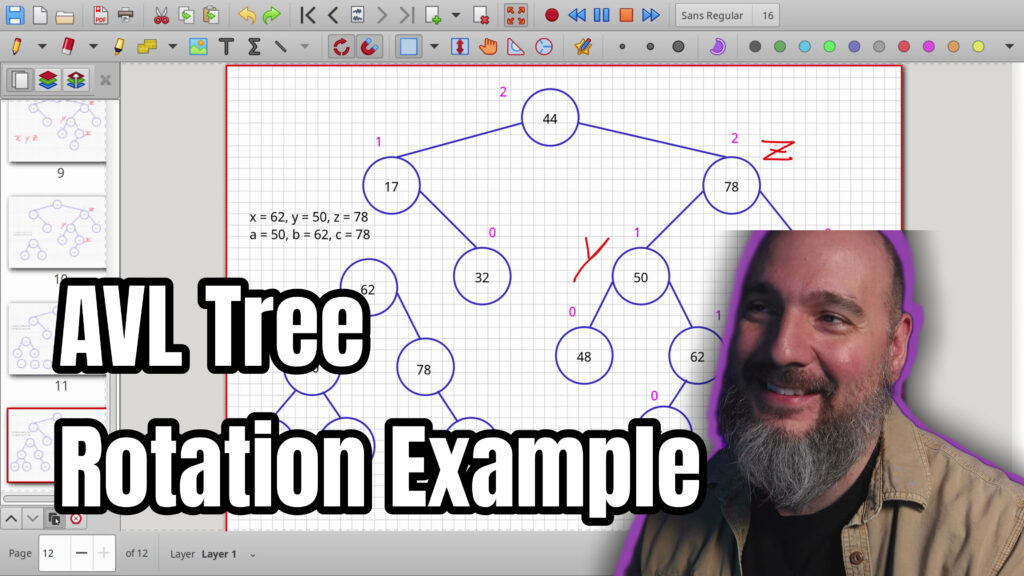
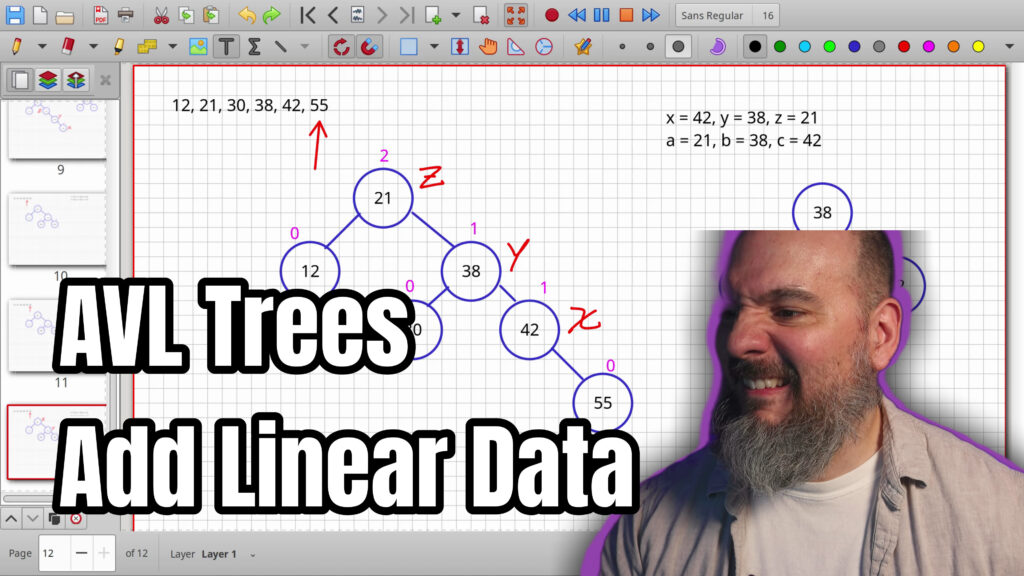
Learn how to maintain balance in AVL trees through rotations. This tutorial shows inserting a new node into an AVL tree, recalculating balance factors up the path to the root, identifying the first imbalanced node, selecting X Y Z nodes based on subtree heights, and executing a double right rotation to restore the AVL property while preserving binary search tree ordering.
AVL Tree Rotation Types Explained for Self-Balancing Binary Search Trees

AVL Tree Rotation Types Explained for Self-Balancing Binary Search Trees

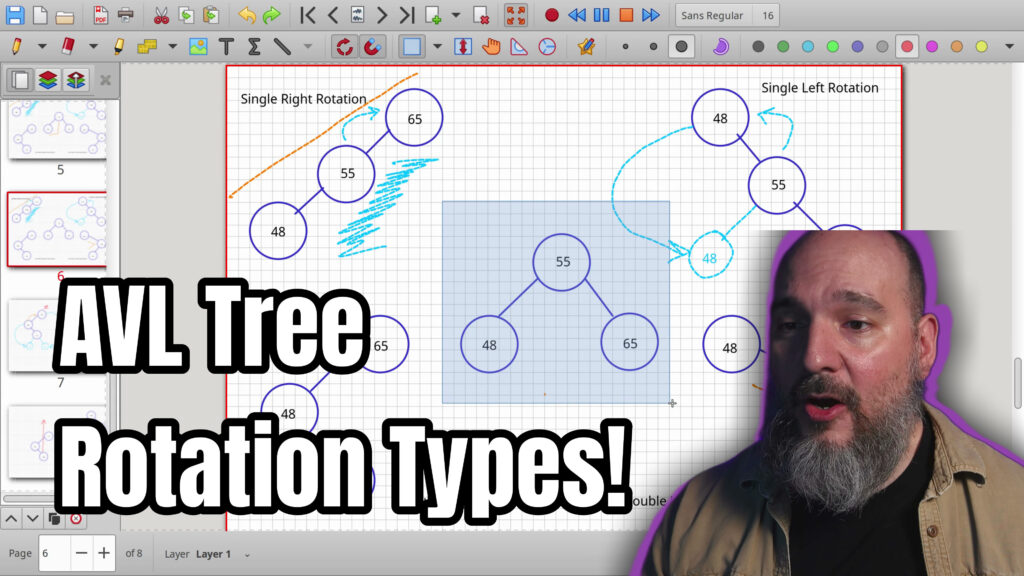
In AVL trees, when we find a node with a balance factor of 2 or worse, we perform rotations on the trinode subtree. There are four input patterns that all resolve to the same balanced output pattern through single or double rotations. Single rotations handle straight line imbalances while double rotations address the zigzag cases. Each rotation rearranges parent-child pointers to reduce the height from 3 to 2, helping keep the overall tree balanced for log time operations.
AVL Tree Tutorial: Balance Factors and Why They Fix Slow BSTs

AVL Tree Tutorial: Balance Factors and Why They Fix Slow BSTs

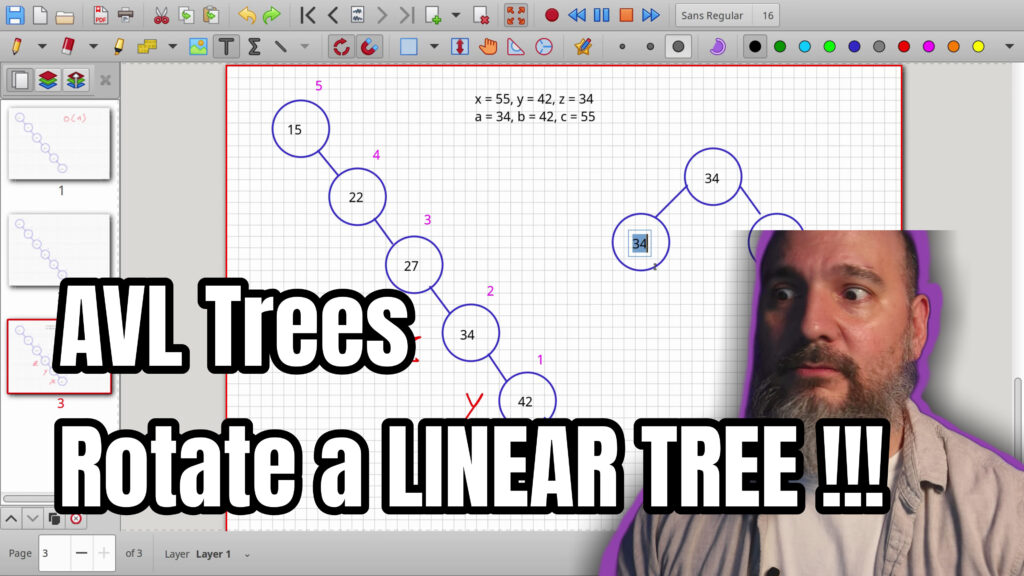
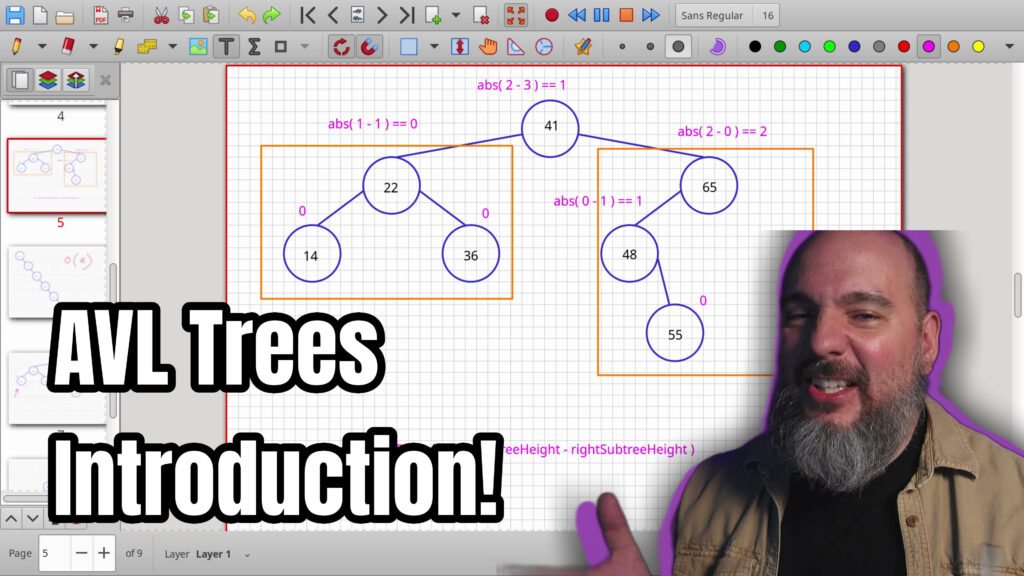
AVL trees are self-balancing binary search trees that prevent the tree from becoming unbalanced. We compute balance factors as the absolute value of left subtree height minus right subtree height. If any node has a balance factor of 2 or worse, we rebalance using rotations on trinode subtrees. This keeps search, insert, and other operations efficient at logarithmic time.