

Posted inAVL Trees Binary Search Trees Computer Science
AVL Tree Rotation Types Explained for Self-Balancing Binary Search Trees
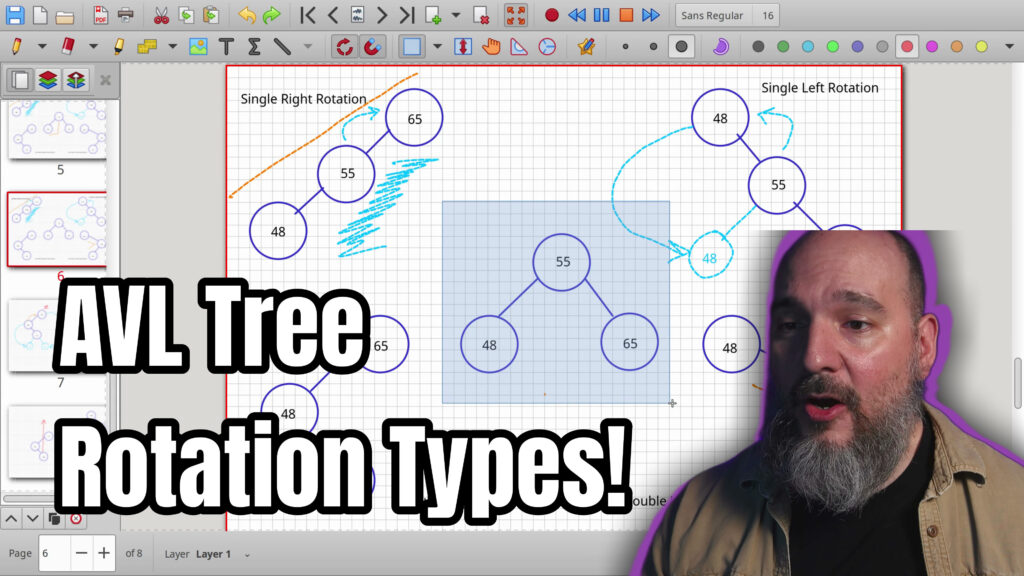
In AVL trees, when we find a node with a balance factor of 2 or worse, we perform rotations on the trinode subtree. There are four input patterns that all resolve to the same balanced output pattern through single or double rotations. Single rotations handle straight line imbalances while double rotations address the zigzag cases. Each rotation rearranges parent-child pointers to reduce the height from 3 to 2, helping keep the overall tree balanced for log time operations.
